
A Framework for Deploying Growth Capital Across the Energy Value Chain
By: Jeff Johnson, General Partner & Head of Energy Tech, B Capital
Introduction
The AI revolution has created an energy problem of historic proportions. Data, compute and capital are all scaling exponentially to power the next generation of artificial intelligence. But energy supply is essentially flat. This widening gap between surging demand for compute and an energy supply that has failed to keep pace defines what we believe is a generational investment opportunity. Hyperscaler capital expenditures have grown over 250% since 2019.1 U.S. data center electricity consumption is projected to exceed 10% of national supply by 2028.2 Power prices and interconnection wait times, the queue to connect new generation to the grid, have both surged.
In this environment, we believe the companies that will create the most value are those that can deliver power faster, cheaper, and more efficiently, while navigating the complex local realities of energy markets around the world. The six principles that follow are our guide to finding them.
Over the past two years, we have published a series of papers articulating how B Capital approaches investing at the intersection of energy and technology. In our work on Adoption Readiness Levels, published as After Decades of Focus on Technology Innovation, It’s Time for Climate Companies to Ask: ‘Can We Scale This’?, we made the case that the energy technology sector had over-indexed on technical development at the expense of commercial viability. And in The 10 Factors That Guide Our Resilience Tech Investments, we laid out the growth-stage underwriting framework we use to evaluate companies across the energy and infrastructure landscape including a focus on investing with core economic fundamentals, not subsidies or mandates.
This paper builds on that foundation. With respect to our energy tech investment strategy, we are generally guided by six principles that reflect what we have learned as investors and operators in both energy and technology. These principles are not abstract. They are born from the patterns we see across our portfolio, the mistakes we have studied in prior market cycles, and the structural dynamics reshaping how the world uses electricity.
Guiding Principles For Energy Tech Investing
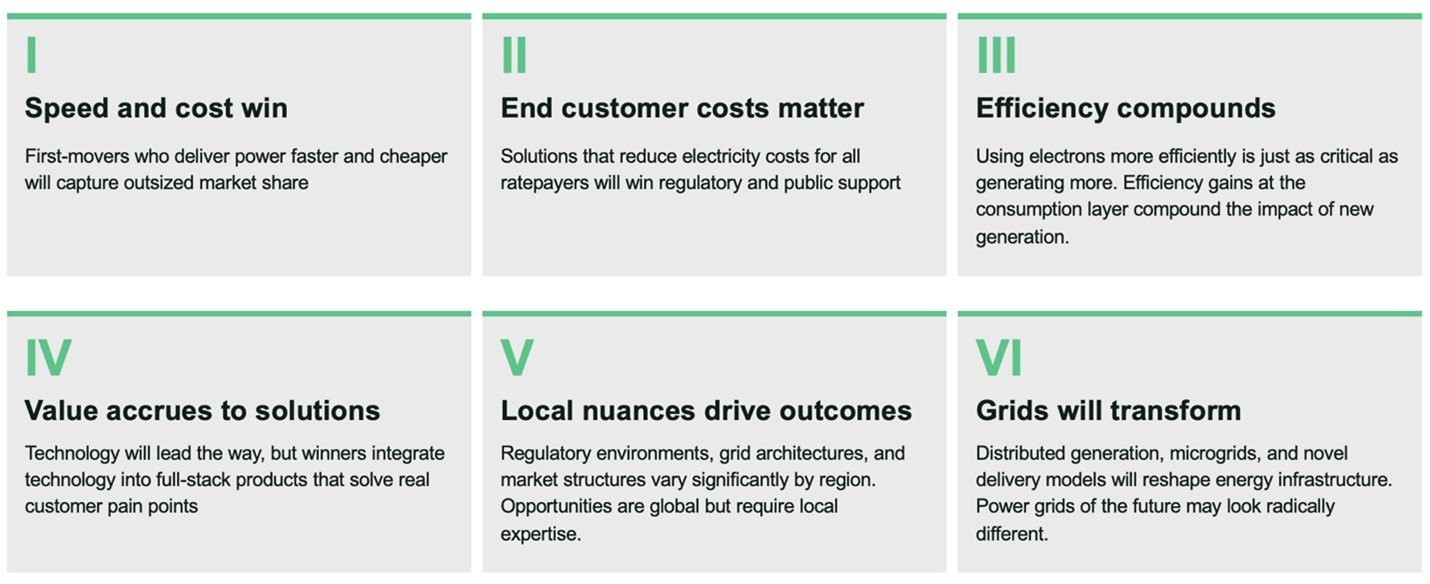
Figure 1: Guiding Principles for Energy Tech Investing
I. Speed and Cost Win
The AI revolution has made energy an urgent problem, not a theoretical one. Hyperscalers need power now to keep pace with compute demand. Consumers are facing electricity costs that have risen sharply over the past several years. And regulators and policymakers on both sides of the aisle recognize that near-term solutions are critical.
This urgency is why speed and cost sit at the top of our investment framework. We believe first-movers who can deliver power faster and cheaper will capture outsized market share and the market is rewarding them for it.
Today, speed matters more than cost. When a hyperscaler is willing to pay a premium for power delivered in 18 months rather than waiting five years for a cheaper alternative, the company that can execute wins the contract. Over time, however, cost will reassert itself as the dominant driver. The companies that endure will be those that move fast today and drive costs down as they scale.
This is one of the reasons behind our investment leading Fervo Energy’s Series E round. Fervo Energy has demonstrated the ability to bring new geothermal capacity online quickly, delivering firm, clean power to customers on timelines that compete with natural gas while maintaining a cost structure that positions the company for long-term competitiveness. It is both a near-term solution and a potentially transformational one.
It is also why we have been more measured in our approach to nuclear, both fission and fusion. These technologies carry enormous long-term potential, but they have historically struggled on both speed and cost. As growth-stage investors, we are watching the space closely looking for signals that these obstacles will be overcome.
Energy storage is another area where speed and cost align well. Storage can be deployed relatively quickly and cost-effectively, adding flexibility and reliability to the grid without the long development timelines associated with new generation assets. And solar, which in some ways has faded from the conversation, deserves renewed attention. It remains one of the fastest and cheapest sources of new electricity on the planet. We expect solar to re-emerge as a central part of the energy discussion, and we see potential for compelling investment opportunities as the market recalibrates around that reality.
II. End Customer Costs Matter
Much of today’s energy conversation centers on how to power hyperscalers and data centers. That focus is understandable as these are the customers driving demand and, in many cases, willing to pay significant premiums for access to power. But that willingness to pay is itself part of the problem. Hyperscaler demand is a major driver of the electricity price inflation now hitting consumers across the country.
The pressure is building from all directions. Data center operators have been called to the White House over rising energy costs. Community opposition to new data center projects is growing as residents worry about the impact on local electricity rates. The social license to continue building energy infrastructure for AI is not guaranteed and must be earned.
This is why end customer costs are another central theme in our investment framework. The energy transition cannot succeed if it raises prices for the average ratepayer. Solutions that reduce electricity costs for consumers, not just serve hyperscalers, will win regulatory support, public backing, and long-term market position. Fail to address consumer affordability, and you risk losing the political and social foundation that allows continued investment in data center infrastructure and the broader buildout that is, in many ways, a national priority.
For us, this principle directly informed our investment in Lunar Energy. Lunar Energy is a residential energy storage platform, both hardware and software, built entirely around helping homeowners lower their electricity bills while improving reliability. It represents exactly the kind of solution that balances the needs of the broader energy system: it supports grid flexibility while delivering tangible economic value to the end consumer.
III. Efficiency Compounds
We think about power in three buckets: you make electrons, you move them, and you use them. Most of the energy conversation today focuses on the first bucket of generating more power and producing it at lower cost. But an electron that never needed to be used is just as valuable as one that was generated. In many cases, it is more valuable, because it reduces costs across the entire system.
Getting more from less has always been a compelling investment thesis, and it is especially critical now. As demand accelerates and new generation takes time to come online, efficiency gains at the consumption layer compound the impact of every new megawatt added to the grid. This is not a secondary consideration; it is mission critical.
We are actively evaluating solutions that drive energy efficiency across multiple end markets. In data centers, where power density and cooling demands are intensifying, even modest efficiency improvements translate into meaningful cost savings and capacity gains. But the opportunity extends well beyond data centers into industrial, manufacturing, and consumer applications where energy waste remains significant.
Efficiency also takes a less obvious form: load shifting, moving consumption to times when power is cheaper or cleaner. Lunar Energy’s AI platform is a good example. By enabling homeowners to shift consumption away from peak pricing and drawing from battery storage when grid electrons are expensive and charging when they are cheap, the system captures efficiency gains without reducing usage. It is a fundamentally different approach: not just using less but using power at the right time. The same logic applies on a larger scale, where flexible loads can be moved to times and locations where low-cost generation, such as solar, is abundant.
The middle bucket deserves its own attention. Moving electrons efficiently — reducing transmission losses, relieving congestion, and maximizing the capacity of existing infrastructure — is a capital-efficient way to add effective supply to the grid. New wire takes years to permit and build. Software and grid-edge technologies that unlock latent capacity in existing transmission and distribution assets can deliver results on much faster timelines. This is an area we are actively evaluating, and we expect it to become an increasingly important part of the energy tech investment landscape as grid constraints tighten.
The compounding nature of efficiency is what makes it so powerful. Every dollar saved on consumption is a dollar that does not need to be spent on new generation, transmission, or distribution. Over time, these gains stack.
IV. Value Accrues to Solutions
Energy tech has long been driven by technological breakthroughs — a new way to generate electrons from the sun, a novel fission reactor design, a different battery chemistry for storage. These advances matter. But if you study the companies that have created the most value, they share a common trait: they integrated technologies into turnkey solutions that solve problems customers feel every day.
Most customers are not buying a technology. Instead, they are buying a solution. This solution is something they can pay for, adopt, and use without having to think about the underlying components. Tesla is a clear example. The company’s value was not built on any single technology (e.g. batteries, motors, inverters), but on integrating all of them into products that customers wanted to own. The result is one of the most valuable companies in the world.
This insight is not new to our thinking. In our work on the Adoption Readiness Level framework, After Decades of Focus on Technology Innovation, It’s Time for Climate Companies to Ask: ‘Can We Scale This?’ we argued that the energy tech sector had over-indexed on technical development at the expense of commercial readiness. The question is not just “can we build it?” but “will customers adopt it at scale?” Similarly, in The 10 Factors That Guide Our Resilience Tech Investments, the majority of our criteria focus on the customer and market side of the equation — market readiness, adoption readiness, unit economics, competitive positioning.
Technology is a necessary ingredient, but it is rarely sufficient. We expect the winners in energy tech will be the companies that work backwards from real customer pain points, packaging proven technologies into full-stack products that are easy to buy, deploy, and use. That is where value accrues, not to the component, but to the solution.
V. Local Nuances Drive Outcomes
It would be easy to look at the energy opportunity as a single, global problem. But when you get into the details of actually building companies and deploying capital, you quickly discover that energy is one of the most locally defined markets in the world.
Market structures, regulatory environments, grid architectures, and customer economics vary enormously. This variability is not just country to country, but region to region and even state to state. A retail electricity solution that thrives in ERCOT’s deregulated Texas market looks nothing like what wins in California’s heavily regulated environment or in the Northeast’s organized wholesale markets. The differences are not marginal. They are structural, and they determine which companies succeed and which ones stall.
This is equally true globally. Energy markets in Europe, the Middle East, and Asia each present distinct grid configurations, policy frameworks, and demand profiles. The opportunity is global, but execution requires deep local expertise with an understanding of how tariffs work, how interconnection queues move, how permitting processes function, and how customers actually buy.
For companies, the challenge is building a solution that can adapt across multiple jurisdictions without being rebuilt from scratch each time. Best-in-class companies develop solutions that can be brought to different markets, at times in partnership with local stakeholders, adapting to the specific regulatory and economic conditions of each geography while maintaining a consistent core product.
For investors, the implication is clear: you cannot underwrite energy tech companies from a spreadsheet. If you do not understand the local dynamics that will define a company’s go-to-market, technology choices, and competitive positioning in each region, you will miss critical risks. The companies that win will be those that solve one big problem but do it market by market with the nuance that each one demands.
VI. Grids Will Transform
The power grid of the future may look radically different from the one we have today. That is both a risk and an opportunity and as investors, we need to position for it.
We are at a unique inflection point. Electricity demand is accelerating at a pace we have not seen in decades, driven by data centers and wider trends toward electrification. At the same time, a wave of innovation is reshaping energy markets more broadly. These two forces are colliding simultaneously, and we expect the result will be a fundamental transformation of grid infrastructure.
Several shifts are already underway. Generation is moving from centralized to distributed models. A digital layer is emerging in electricity markets that enables real-time optimization in ways that were not previously possible. New technologies are unlocking more value from existing transmission and distribution infrastructure by allowing grid operators to move more power through the same wires. And in some markets, particularly in the developing world, there is an opportunity to leapfrog legacy grid architecture entirely and build distributed-first systems from the ground up.
Perhaps the most striking illustration of how different the future grid could look is the emergence of power infrastructure beyond Earth itself. Star Catcher, a B Capital portfolio company, is building what is effectively a power grid for space with a network of orbital Power Nodes that concentrate solar energy and beam it on-demand to client satellites in low-earth orbit. The concept may sound far-fetched, but the underlying logic is the same as terrestrial grid economics: power is one of the primary design constraints for every satellite, and Star Catcher’s solution is designed to deliver energy at a fraction of the cost of onboard alternatives while shifting spend from capex to opex. With tens of thousands of satellites now in orbit and the space economy scaling rapidly, the need for flexible, on-demand power in orbit is large and growing.3 It is, in the most literal sense, a picks-and-shovels infrastructure play and one that extends the logic of grid transformation into an entirely new domain.
None of this means the grid as we know it disappears overnight. But it does mean that the assumptions baked into decades of centralized planning are being challenged on multiple fronts. The companies and investors who anchor their strategies to the grid of the past will miss the opportunity and potentially take on risks they do not fully appreciate.
Our job as investors is to see around this corner. We must understand the likely trajectories of grid evolution and invest with those outcomes in mind. That means backing companies that are not just serving today’s infrastructure but are positioned to thrive as the architecture itself changes.
Conclusion
The energy landscape is being reshaped by forces that are structural, not cyclical. The exponential growth of AI, the electrification of transportation and industry, and the aging of legacy grid infrastructure are converging to create what we believe is a generational investment opportunity.
But capturing that opportunity requires more than capital. It requires a framework, a set of principles, grounded in how energy markets actually work, how companies actually scale, and where value actually accrues. The six principles outlined in this paper represent how we generally think about deploying growth capital across the energy tech value chain.
Speed and cost determine who wins today. End customer affordability determines who retains the social license to keep building. Efficiency compounds across the entire system. Value flows to integrated solutions, not standalone technologies. Local expertise separates the companies that scale from those that stall. And the grid itself is transforming in ways that will reward the forward-looking and penalize the static.
Taken together, these six principles are our framework for finding the companies that will address soaring energy costs, and for deploying capital behind them with conviction.
These principles are not theoretical. They are embedded in investment process at B Capital from Fervo Energy’s rapid deployment of geothermal power, to Lunar Energy’s consumer-first approach to residential storage, to Star Catcher’s power grid in space, to the pipeline of companies we are evaluating across generation, transmission, and consumption.
The value of an electron is increasing every day. The companies that address that challenge will define the next era of energy infrastructure. We intend to be their partners.
LEGAL DISCLAIMER
All information is as of 04.01.2026 and subject to change. This content is a high-level overview and for informational purposes only. Cartain of the companies discussed herein are portfolio companies of B Capital; however, such investments do not represent all B Capital investments. Certain statements reflected herein reflect the subjective opinions and views of B Capital personnel. Such statements cannot be independently verified and are subject to change. There can be no assurance any such trends or correlations will continue in the future. Reference to third-party firms or businesses does not imply affiliation with or endorsement by such firms or businesses. It should not be assumed that any investments or companies identified and discussed herein were or will be profitable. Past performance is not indicative of future results. The information herein does not constitute or form part of an offer to issue or sell, or a solicitation of an offer to subscribe or buy, any securities or other financial instruments, nor does it constitute a financial promotion, investment advice or an inducement or incitement to participate in any product, offering or investment. Much of the relevant information is derived directly from various sources which B Capital believes to be reliable, but without independent verification. This information is provided for reference only and the companies described herein may not be representative of all relevant companies or B Capital investments. You should not rely upon this information to form the definitive basis for any decision, contract, commitment or action.
SOURCE
- Combined capital expenditures of Amazon, Microsoft, Alphabet, and Meta grew from approximately $94 billion in 2020 to over $300 billion in 2025, with projections exceeding $600 billion in 2026. Sources: Company filings; CreditSights, Hyperscaler Capex 2026 Estimates (November 2025), https://know.creditsights.com/insights/technology-hyperscaler-capex-2026-estimates/
- Lawrence Berkeley National Laboratory, 2024 United States Data Center Energy Usage Report (January 2025), commissioned by the U.S. Department of Energy. The report’s high-end scenario projects data center electricity consumption reaching up to 12% of total U.S. supply by 2028, up from approximately 4.4% in 2023. https://escholarship.org/uc/item/32d6m0d1
- As of early 2025, approximately 15,000 satellites orbit Earth in total, with roughly 11,000–12,000 active. Forecasts project the active satellite population could exceed 60,000 by 2030. Sources: European Space Agency Space Debris Office; Pixalytics, Satellites in Space (March 2025), https://www.pixalytics.com/satellites-in-space-2025/; Payload Space, 2025 Orbital Launch Attempts (January 2026), https://payloadspace.com/2025-orbital-launch-attempts-by-country/