By: Jeff Johnson, Karly Wentz, Nate Johnson and Eric Brook
The U.S. power grid is evolving rapidly as the economics and patterns of electricity production, consumption and pricing change. Demand is rising as homes electrify transportation, heating and appliances, while grid operations are growing more complex due to aging infrastructure, extreme weather and localized congestion. At the same time, retail electricity pricing is shifting toward time-based and dynamic structures that place more responsibility on end users to actively manage consumption.
For homeowners, this translates to higher bills, more frequent exposure to outages and limited ability to control when energy flows to or from the grid. For utilities, it brings rising peak loads, constrained capacity and growing reliance on flexible distributed resources to maintain reliability. Residential solar and storage can help address these challenges, but only when hardware, software and grid integration seamlessly work together.
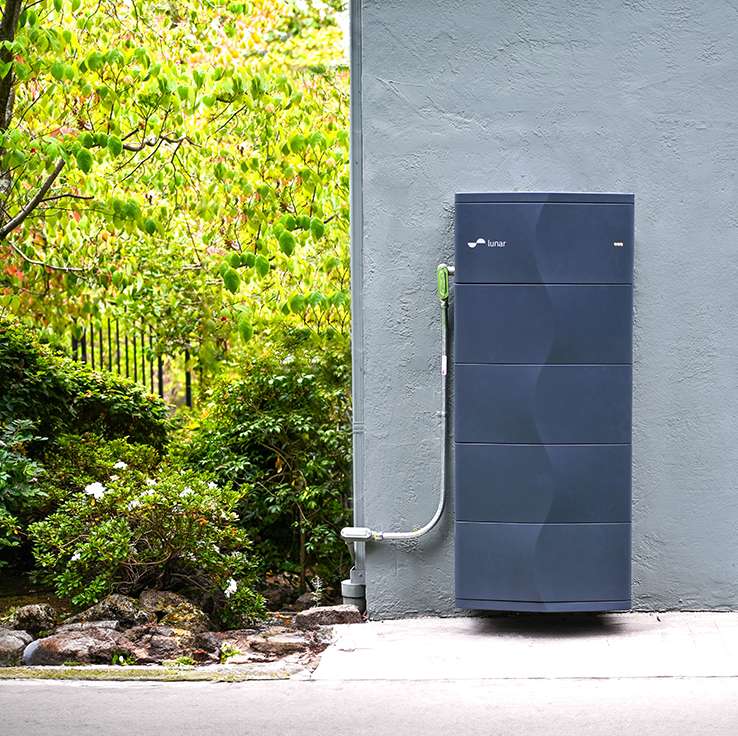
Lunar Energy has built exactly that. The company’s modular battery system was designed not just for performance, but for real-world deployment with installers in mind – fewer components, faster commissioning, and flexible configurations for different home sizes. The result is a system that works for both homeowners and the installers who put it in.
B Capital is pleased to lead the company’s $100M Series D funding round. Founded in 2020 and headquartered in Mountain View, California, Lunar Energy’s integrated hardware and software platform was designed from the ground up to serve homeowners, installers, and grid operators.
Why Legacy Residential Storage Is No Longer Sufficient
The gap between what residential storage could deliver and what it delivers today comes down to system design. Many incumbent solutions were built for a regulatory environment defined by net metering and static electricity rates, where active optimization was optional rather than required. As pricing structures and grid requirements evolve, those assumptions no longer hold.
Hardware-first products often lack the software sophistication required to adapt to changing rates or grid signals. Software-only platforms, in turn, depend on third-party devices they don’t control. Most residential systems weren’t designed to participate meaningfully in distributed power plants, either because they lack the necessary controls or because their platforms weren’t built for large-scale coordination.
The result is a fragmented ecosystem where hardware is often undifferentiated, software is bolted on rather than deeply integrated and grid participation remains an afterthought. What’s needed to unlock the full value of residential storage is a platform built from the ground up, one that combines purpose-built hardware with intelligent software and native grid connectivity. That level of coordination depends on integration across hardware, software and grid interfaces at the system architecture level, rather than relying on legacy architectures that were not designed for coordinated dispatch.
Turning Homes into Grid Assets
Lunar Energy has built an integrated home battery system designed to make electrification simple, affordable and resilient. Residential batteries are no longer simply backup devices. They are increasingly becoming coordinated grid infrastructure. With 650 MW of distributed devices under management and new systems deployed daily, Lunar Energy is proving that the future of residential energy requires hardware and software working together from day one to optimize for homeowners, installers and grid operators.1
For homeowners, the Lunar Energy system delivers immediate, tangible value. The modular battery provides whole-home backup during outages, a critical feature as extreme weather events and grid strain become more frequent. In 2024, the average U.S. electricity customer lost power for 11 hours, nearly double the prior decade’s average, with major weather events accounting for 80% of those hours.2 Recent studies also show that the longest outage a typical customer experiences has grown from about 8 hours in 2022 to nearly 13 hours by mid 2025, exactly the kind of extended interruption a whole home system is designed to cover.3
The product’s DC-coupled architecture, which connects solar panels directly to the battery and reduces unnecessary energy conversion, improves overall system efficiency. That higher efficiency translates directly into greater bill savings for homeowners, capturing more value from every kilowatt-hour of solar generation. Integrated smart circuit controls allow homeowners to prioritize which appliances stay powered during an outage via a simple app, giving them direct control over how stored energy is used.
Beyond the system’s differentiated hardware, Lunar Energy’s software platform provides customers with even more value. Rather than relying on static schedules or manual configuration, the company operates a forecasting and optimization platform that continuously models household energy production, consumption and tariff structures. In turn, the system automatically determines how and when to charge or discharge the battery across three objectives: lowering electricity bills, preserving backup readiness and enabling grid participation. In practice, this means a homeowner can open the Lunar Energy app, see exactly how energy is flowing through their home, and adjust priorities in real time – keeping the refrigerator and home office running during a grid event while temporarily pausing the EV charger. The system can also act autonomously, shifting loads and dispatch timing based on rate signals the homeowner never has to monitor. For installers and third-party asset owners, the same platform provides fleet-level visibility and management tools, enabling them to monitor system health, track performance and manage warranty workflows across their entire installed base from a single interface.
For utilities and grid operators, Lunar Energy’s platform transforms residential batteries into dispatchable assets, meaning they can be coordinated and activated when the grid requires support. Lunar Energy’s software already manages one of the largest distributed power programs in the country, coordinating nearly 150,000 devices across key markets including California, Hawaii, New England and Puerto Rico.4 Each connected home becomes a node in a virtual power plant, an aggregated network of distributed batteries coordinated to operate as a single dispatchable resource to meet peak demand. By coordinating thousands of small assets in real-time, Lunar Energy helps reduce strain on the grid without the cost or emissions of traditional peaker plants, fast-ramping gas facilities used during peak demand periods. The results are meaningful: in 2025, Lunar Energy customers earned an average of $464 through grid participation and saved an additional $338 on electricity bills compared to traditional residential battery operation.5 6
Market Position and Pathway to Scale
Lunar Energy has moved beyond development into its next phase of deployment at scale. The Lunar Energy system is fully commercialized and shipping today, with approximately 2,000 installations across key markets in the U.S. The company is scaling production to 20,000 units by the end of 2026 and 100,000 by 2028, a trajectory enabled by partnerships with contract manufacturers and a system architecture designed for scale.7
The company’s strategic go-to-market partnership and investment from Sunrun, the largest residential solar and storage provider in the U.S., gives Lunar Energy an immediate, high-volume deployment channel at national scale. Sunrun brings customer access, installation capability and deep utility relationships, while Lunar Energy provides the integrated platform purpose-built for complex regulatory and grid conditions. As both an installer and a third-party owner of residential energy assets, Sunrun benefits from Lunar Energy’s streamlined installation process and fleet management software across the full asset lifecycle. It also enables the company to expand its reach through additional channel partners to meet the needs of today’s market. Beyond Sunrun, Lunar Energy has established a broad network of regional and national installers, giving the company multiple paths to scale across geographies and customer segments.
Built by the Team That Scaled Modern Energy Storage
Lunar Energy’s founder and CEO, Kunal Girotra, previously led energy storage at Tesla during a formative period for the category. He was responsible for scaling battery products across residential, commercial and grid-scale applications, operating at the intersection of hardware engineering, manufacturing, software and grid integration.
That experience is directly reflected in Lunar Energy’s emphasis on system-level design and software-driven control. Success in residential storage requires navigating certification, supply chains, installation workflows, utility requirements and real-world failure modes. Kunal’s background reflects firsthand experience with these challenges at global scale, reducing execution risk in a sector where many companies underestimate operational complexity.
The broader Lunar Energy team brings complementary expertise across residential energy, grid software and large-scale system deployment. Collectively, they have built and operated platforms that manage energy assets across countless homes, providing a strong foundation for scaling the company’s integrated model.
Backing the Future of Residential Energy Infrastructure
At B Capital, we focus on companies we believe contain proven, scalable and differentiated technology addressing constraints in critical energy infrastructure. Lunar Energy embodies this thesis. The company has moved beyond prototypes to full commercial deployment, with a product in-market and a clear path to scale. Its integrated hardware and software platform creates defensible differentiation in a market where most players compete on only one dimension. It also enables ongoing value capture through grid services and software coordination. Its ability to serve homeowners, installers and utilities position Lunar Energy to capture value across the entire residential energy stack.
We see Lunar Energy as a potential platform company, one that could define how millions of American homes interact with the grid over the coming decades. The residential storage market is large and growing, with installed capacity projected to nearly double by 2030.8 But scale alone is not enough to capture the market. As distributed resources become central to grid reliability, leadership will increasingly accrue to companies positioned at the coordination layer. The winners will be companies that combine hardware excellence with software intelligence and deep grid integration. That is exactly what Lunar Energy has built, and we are thrilled to partner with Kunal and the team as they scale.
LEGAL DISCLAIMER
All information is as of 03.09.2026 and subject to change. This content is a high-level overview and for informational purposes only. The investment discussed herein is a portfolio company of B Capital; however, such investment does not represent all B Capital investments. Certain statements reflected herein reflect the subjective opinions and views of B Capital personnel. Such statements cannot be independently verified and are subject to change. There can be no assurance any such trends or correlations will continue in the future. Reference to third-party firms or businesses does not imply affiliation with or endorsement by such firms or businesses. It should not be assumed that any investments or companies identified and discussed herein were or will be profitable. Past performance is not indicative of future results. The information herein does not constitute or form part of an offer to issue or sell, or a solicitation of an offer to subscribe or buy, any securities or other financial instruments, nor does it constitute a financial promotion, investment advice or an inducement or incitement to participate in any product, offering or investment. Much of the relevant information is derived directly from various sources which B Capital believes to be reliable, but without independent verification. This information is provided for reference only and the companies described herein may not be representative of all relevant companies or B Capital investments. You should not rely upon this information to form the definitive basis for any decision, contract, commitment or action.
SOURCE
- Latitude Media, Home battery startup Lunar Energy aims to quadruple its manufacturing, February 4, 2026
- EIA, Hurricanes in 2024 led to the most hours without power in the United States in 10 years, December 1, 2025
- JD Power, Disasters Become a Fact of Life for Many U.S. Electric Utility Customers, October 2025
- Canary Media, Lunar Energy lands $232M to boost smart home batteries, February 4, 2026
- Bloomberg, Ex-Tesla Energy Chief Raises $230 Million for Battery Startup, February 4, 2026
- Lunar Energy, What is Lunar AI, https://www.lunarenergy.com/learn/learn-articles/what-is-lunar-ai
- Ibid.
- B Capital analysis